0
0 0
0 0
0 0
0 0
0
 Anoniem
 Anoniem
 Anoniem


 Anoniem
 Anoniem


 Om mee te kunnen praten op het forum dien je ingelogd te zijn.Nog geen account?















Chanyeol schreef:
YusFrom Wikipedia, the free encyclopedia
Jump to navigationJump to searchFor other uses, see Yus (disambiguation).
Cyrillic letter YusPhonetic usage:The Cyrillic scriptSlavic lettersNon-Slavic lettersArchaic letters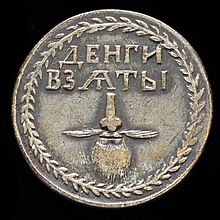
This beard tax token from 1705 contains Ѧ
Little yus (Ѧ ѧ) and big yus (Ѫ ѫ), or jus, are letters of the Cyrillic script[1] representing two Common Slavonic nasal vowels in the early Cyrillic and Glagolitic alphabets. Each can occur in iotified form (Ѩ ѩ, Ѭ ѭ), formed as ligatures with the decimal i (І). Other yus letters are blended yus (Ꙛ ꙛ), closed little yus (Ꙙ ꙙ) and iotified closed little yus (Ꙝ ꙝ).

Cyrillic little yus (left) and big yus (right); normal forms (above) and iotified (below)
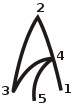
Handwritten little yus
Phonetically, little yus represents a nasalized front vowel, possibly [ɛ̃], while big yus represents a nasalized back vowel, such as IPA [ɔ̃]. This is also suggested by the appearance of each as a 'stacked' digraph of 'Am' and 'om' respectively.
The names of the letters do not imply capitalization, as both little and big yus exist in majuscule and minuscule variants.
Contents
1Disappearance1.1In Bulgarian and Macedonian1.2In Russian1.3In Polish1.4In Romanian1.5In Slovak2In Interslavic3Related letters and other similar characters4Computing codes5References
Disappearance[[url=https://en.wikipedia.org/w/index.php?title=Yus&action=edit§ion=1]edit[/url]]All modern Slavic languages that use the Cyrillic alphabet have lost the nasal vowels (at least in their standard varieties), making Yus unnecessary.
In Bulgarian and Macedonian[[url=https://en.wikipedia.org/w/index.php?title=Yus&action=edit§ion=2]edit[/url]]Big Yus was a part of the Bulgarian alphabet until 1945. However, by then, in the eastern dialects, the back nasal was pronounced the same way as ъ [ɤ]. Because the language is based mainly on them, the western pronunciations were deemed unliterary, and the letter was gone.
There were some Bulgarian and Macedonian dialects spoken around Thessaloniki and Kastoria in northern Greece that still preserve a nasal pronunciation e.g. [ˈkɤ̃de ˈɡrẽdeʃ ˈmilo ˈt͡ʃẽdo] (Къде гредеш, мило чедо?; "Where are you going, dear child?" , which could be spelled pre-reform as "Кѫде грѧдеш, мило чѧдо?" with big and little yus.
On a visit to Razlog, in Bulgaria's Pirin Macedonia, in 1955, the Russian dialectologist Samuil Bernstein noticed that the nasal pronunciation of words like [ˈrɤ̃ka] (hand), [ˈt͡ʃẽdo] (child) could still be heard from some of the older women of the village. To the younger people, the pronunciation was completely alien; they would think that the old ladies were speaking Modern Greek.[2]
In Russian[[url=https://en.wikipedia.org/w/index.php?title=Yus&action=edit§ion=3]edit[/url]]In Russia, the little Yus came to be pronounced as an iotated /ja/ (я) in the middle or at the end of a word and therefore came to represent that sound also elsewhere; the modern letter я is an adaptation of its cursive form of the 17th century, enshrined by the typographical reform of 1708. (That is also why я in Russian often corresponds to nasalized ę in Polish; cf. Russian пять; Polish pięć.)
In Polish[[url=https://en.wikipedia.org/w/index.php?title=Yus&action=edit§ion=4]edit[/url]]In Polish, which is a Slavic language written in the Latin alphabet, the letter Ę ę has the phonetic value of little Yus, and Ą ą has that of big Yus. The iotated forms are written ię, ią, ję, ją in Polish. However, the phonemes written ę and ą are not directly descended from those represented by little and big yus but developed after the original nasals merged in Polish and then diverged again. (Kashubian, the closest language to Polish, uses the letter ã instead of ę.)
In Romanian[[url=https://en.wikipedia.org/w/index.php?title=Yus&action=edit§ion=5]edit[/url]]Little and big yuses can also be found in the Romanian Cyrillic alphabet, used until about 1860. Little Yus was used for /ja/ and big Yus for /ɨ/. Now Romanian uses the Latin alphabet and /ɨ/ is written Îî.
In Slovak[[url=https://en.wikipedia.org/w/index.php?title=Yus&action=edit§ion=6]edit[/url]]Little yus in Slovak language alphabet has been substituted by a (desať, načať), e (plesať), iotified ia (žiadať, kliatba, mesiac), ie (bdieť) and ä in several cases (pamäť, päť, svätý). Big yus is transliterated and pronounced as u, or accented ú (budeš, muž, mučeník, ruka, navyknúť, pristúpiť, púť, usnúť). Iotified, and closed iotified form of little yus occur as ja (e.g. jazyk, svoja, javiť, jasle).
In Interslavic[[url=https://en.wikipedia.org/w/index.php?title=Yus&action=edit§ion=7]edit[/url]]The interslavic language, a zonal, constructed, semi-artificial language based on Proto-Slavic and Old Church Slavonic modified based on the commonalities between living Slavic languages, allows (though doesn't encourage it for intelligibility purposes) to use both the little and big yus when writing in the scientific variety of its Cyrillic script. The letters correspond directly to their etymological values from Proto-Slavic, but do not retain the nasal pronunciation, instead going for one aiming to convey the "middle-ground" sounds found in etymologically corresponding letters in living Slavic languages. The iotated versions are not part of the standard scientific vocabulary, where the yuses are instead accompanied by the Cyrillic letter "ј", also used in the modern Serbian alphabet, though their use is optionally permissible for aesthetic reasons if one opts for using the more standard iotated vowels in their writing, so that consistency is preserved.
Related letters and other similar characters[[url=https://en.wikipedia.org/w/index.php?title=Yus&action=edit§ion=8]edit[/url]]Я я : Cyrillic letter YaѢ ѣ : Cyrillic letter YatĘĄ
Computing codes[[url=https://en.wikipedia.org/w/index.php?title=Yus&action=edit§ion=9]edit[/url]]CharacterѦѧѨѩEncodingsdecimalhexdecimalhexdecimalhexdecimalhexCharacterѪѫѬѭEncodingsdecimalhexdecimalhexdecimalhexdecimalhexCharacterꙚꙛEncodingsdecimalhexdecimalhexCharacterꙘꙙꙜꙝEncodingsdecimalhexdecimalhexdecimalhexdecimalhex
Percy schreef:
Kun je lezen
Yyyyyyyyyyus niet JuS
Chanyeol schreef:
Jus (saus)
Naar navigatie springenNaar zoeken springen
Jus
Jus is een dik gemaakte saus, gewoonlijk gemaakt op basis van vocht dat uit vlees of groente loopt tijdens het koken of braden.
bijvoorbeeld wordt daar ook gezien als “jus”.
StommerdPercy schreef:
YUS
YUS
Jus (saus)
Naar navigatie springenNaar zoeken springen

Jus
Jus is een dik gemaakte saus, gewoonlijk gemaakt op basis van vocht dat uit vlees of groente loopt tijdens het koken of braden.
bijvoorbeeld wordt daar ook gezien als “jus”.
Kun je lezen
Yyyyyyyyyyus niet JuS
YusFrom Wikipedia, the free encyclopedia
Jump to navigationJump to searchFor other uses, see Yus (disambiguation).
Cyrillic letter YusPhonetic usage:The Cyrillic scriptSlavic lettersNon-Slavic lettersArchaic letters

This beard tax token from 1705 contains Ѧ
Little yus (Ѧ ѧ) and big yus (Ѫ ѫ), or jus, are letters of the Cyrillic script[1] representing two Common Slavonic nasal vowels in the early Cyrillic and Glagolitic alphabets. Each can occur in iotified form (Ѩ ѩ, Ѭ ѭ), formed as ligatures with the decimal i (І). Other yus letters are blended yus (Ꙛ ꙛ), closed little yus (Ꙙ ꙙ) and iotified closed little yus (Ꙝ ꙝ).

Cyrillic little yus (left) and big yus (right); normal forms (above) and iotified (below)

Handwritten little yus
Phonetically, little yus represents a nasalized front vowel, possibly [ɛ̃], while big yus represents a nasalized back vowel, such as IPA [ɔ̃]. This is also suggested by the appearance of each as a 'stacked' digraph of 'Am' and 'om' respectively.
The names of the letters do not imply capitalization, as both little and big yus exist in majuscule and minuscule variants.
Contents
1Disappearance1.1In Bulgarian and Macedonian1.2In Russian1.3In Polish1.4In Romanian1.5In Slovak2In Interslavic3Related letters and other similar characters4Computing codes5References
Disappearance[[url=https://en.wikipedia.org/w/index.php?title=Yus&action=edit§ion=1]edit[/url]]All modern Slavic languages that use the Cyrillic alphabet have lost the nasal vowels (at least in their standard varieties), making Yus unnecessary.
In Bulgarian and Macedonian[[url=https://en.wikipedia.org/w/index.php?title=Yus&action=edit§ion=2]edit[/url]]Big Yus was a part of the Bulgarian alphabet until 1945. However, by then, in the eastern dialects, the back nasal was pronounced the same way as ъ [ɤ]. Because the language is based mainly on them, the western pronunciations were deemed unliterary, and the letter was gone.
There were some Bulgarian and Macedonian dialects spoken around Thessaloniki and Kastoria in northern Greece that still preserve a nasal pronunciation e.g. [ˈkɤ̃de ˈɡrẽdeʃ ˈmilo ˈt͡ʃẽdo] (Къде гредеш, мило чедо?; "Where are you going, dear child?"
, which could be spelled pre-reform as "Кѫде грѧдеш, мило чѧдо?" with big and little yus.On a visit to Razlog, in Bulgaria's Pirin Macedonia, in 1955, the Russian dialectologist Samuil Bernstein noticed that the nasal pronunciation of words like [ˈrɤ̃ka] (hand), [ˈt͡ʃẽdo] (child) could still be heard from some of the older women of the village. To the younger people, the pronunciation was completely alien; they would think that the old ladies were speaking Modern Greek.[2]
In Russian[[url=https://en.wikipedia.org/w/index.php?title=Yus&action=edit§ion=3]edit[/url]]In Russia, the little Yus came to be pronounced as an iotated /ja/ (я) in the middle or at the end of a word and therefore came to represent that sound also elsewhere; the modern letter я is an adaptation of its cursive form of the 17th century, enshrined by the typographical reform of 1708. (That is also why я in Russian often corresponds to nasalized ę in Polish; cf. Russian пять; Polish pięć.)
In Polish[[url=https://en.wikipedia.org/w/index.php?title=Yus&action=edit§ion=4]edit[/url]]In Polish, which is a Slavic language written in the Latin alphabet, the letter Ę ę has the phonetic value of little Yus, and Ą ą has that of big Yus. The iotated forms are written ię, ią, ję, ją in Polish. However, the phonemes written ę and ą are not directly descended from those represented by little and big yus but developed after the original nasals merged in Polish and then diverged again. (Kashubian, the closest language to Polish, uses the letter ã instead of ę.)
In Romanian[[url=https://en.wikipedia.org/w/index.php?title=Yus&action=edit§ion=5]edit[/url]]Little and big yuses can also be found in the Romanian Cyrillic alphabet, used until about 1860. Little Yus was used for /ja/ and big Yus for /ɨ/. Now Romanian uses the Latin alphabet and /ɨ/ is written Îî.
In Slovak[[url=https://en.wikipedia.org/w/index.php?title=Yus&action=edit§ion=6]edit[/url]]Little yus in Slovak language alphabet has been substituted by a (desať, načať), e (plesať), iotified ia (žiadať, kliatba, mesiac), ie (bdieť) and ä in several cases (pamäť, päť, svätý). Big yus is transliterated and pronounced as u, or accented ú (budeš, muž, mučeník, ruka, navyknúť, pristúpiť, púť, usnúť). Iotified, and closed iotified form of little yus occur as ja (e.g. jazyk, svoja, javiť, jasle).
In Interslavic[[url=https://en.wikipedia.org/w/index.php?title=Yus&action=edit§ion=7]edit[/url]]The interslavic language, a zonal, constructed, semi-artificial language based on Proto-Slavic and Old Church Slavonic modified based on the commonalities between living Slavic languages, allows (though doesn't encourage it for intelligibility purposes) to use both the little and big yus when writing in the scientific variety of its Cyrillic script. The letters correspond directly to their etymological values from Proto-Slavic, but do not retain the nasal pronunciation, instead going for one aiming to convey the "middle-ground" sounds found in etymologically corresponding letters in living Slavic languages. The iotated versions are not part of the standard scientific vocabulary, where the yuses are instead accompanied by the Cyrillic letter "ј", also used in the modern Serbian alphabet, though their use is optionally permissible for aesthetic reasons if one opts for using the more standard iotated vowels in their writing, so that consistency is preserved.
Related letters and other similar characters[[url=https://en.wikipedia.org/w/index.php?title=Yus&action=edit§ion=8]edit[/url]]Я я : Cyrillic letter YaѢ ѣ : Cyrillic letter YatĘĄ
Computing codes[[url=https://en.wikipedia.org/w/index.php?title=Yus&action=edit§ion=9]edit[/url]]CharacterѦѧѨѩEncodingsdecimalhexdecimalhexdecimalhexdecimalhexCharacterѪѫѬѭEncodingsdecimalhexdecimalhexdecimalhexdecimalhexCharacterꙚꙛEncodingsdecimalhexdecimalhexCharacterꙘꙙꙜꙝEncodingsdecimalhexdecimalhexdecimalhexdecimalhex
 20
20